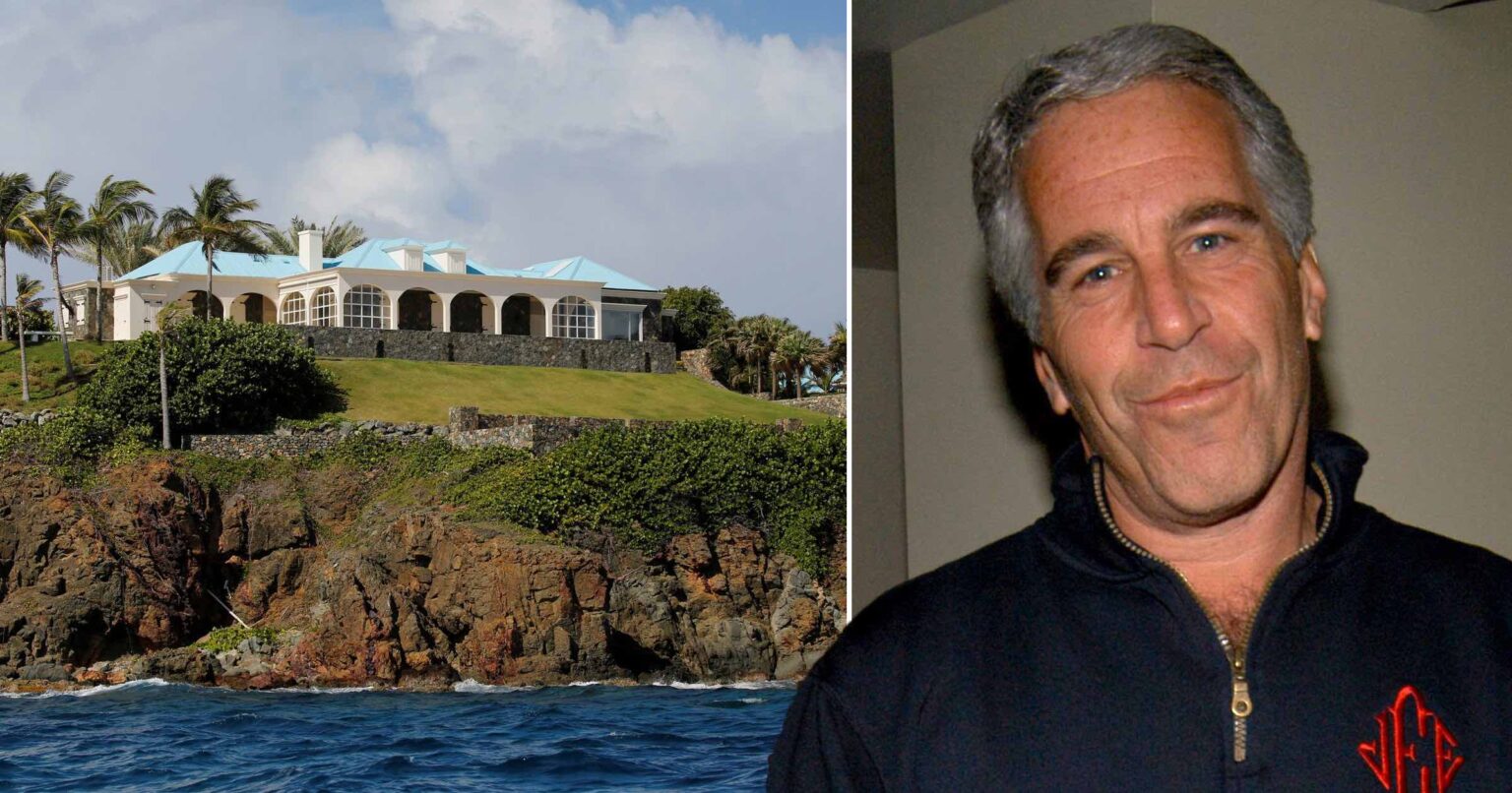
Strange photos: See just how sinister Jeffrey Epstein’s island really was
More than six years after Jeffrey Epstein’s arrest and death in federal custody, the U.S. Virgin Islands compound once known locally as “pedophile island” continues to surface in court records, congressional releases, and victim accounts.
Little Saint James remains the clearest physical record of how the financier allegedly moved, housed, and isolated underage girls under the cover of private-island luxury. High-profile names logged in flight records—former president Bill Clinton and Prince Andrew among them—underscore the reach of those operations.
Origins of Epstein’s island
Epstein bought Little Saint James in the late 1990s as a secluded base for his financial dealings and, investigators later alleged, for sexual exploitation. The island’s isolation and the construction of a main residence, guest cottages, and extensive security systems gave him what prosecutors described as a controlled environment for abuse.
Victim statements detail girls as young as fourteen being flown in under the pretense of modeling jobs or massage work. Ghislaine Maxwell, convicted in 2021 and sentenced to twenty years, is accused of recruiting and grooming many of them. Several women testified they attempted to swim away; others described being caught by security after trying to flee by ATV.
Arrival to Epstein’s sinister island
Epstein’s Boeing 727, nicknamed the Lolita Express, ferried passengers between the U.S. mainland, the Caribbean, and Europe. Flight logs and staff accounts describe young women boarding in New York or Palm Beach and disembarking in St. Thomas before transferring by boat to Little Saint James. Inside the jet, a lounge area opened onto a private bedroom; witnesses told authorities sexual activity occurred on some flights.
Ground crew at Cyril E. King Airport later recalled seeing Epstein escort groups of girls from the plane to waiting vehicles. Locals had already begun calling the island “pedophile island” before federal agents opened a formal investigation.
Photos of Epstein’s Island: A sinister compound
Sarah Ransome, one of the women who came forward publicly, told the New York Post in 2019 that she was raped repeatedly on the island and once tried to escape by swimming into shark-infested waters. She said Epstein’s security team recaptured her after she commandeered an ATV. The compact footprint of Little Saint James—roughly seventy-eight acres—meant cameras, paths, and staff quarters covered almost every approach.
Despite the turquoise water and terraced villas, victim accounts recast the landscape as a closed system of surveillance and control. The same cliffs that appear postcard-ready in real-estate photography are described by survivors as physical barriers.

Recent Document Releases and Renewed Scrutiny
In December 2025 the House Oversight Committee published previously sealed photographs and video taken by U.S. Virgin Islands authorities in 2020. The images show bedrooms, a pool house, and a room outfitted with a dentist’s chair. Additional millions of pages from the Department of Justice followed in early 2026, giving investigators and the public fresh interior views that were unavailable when the original reporting appeared.
Side-by-side comparisons of the new material with earlier aerial shots highlight how little the physical plant has changed since Epstein’s death, even as the paper trail of his activities continues to expand.

Current Ownership and Redevelopment Status
The Epstein estate sold both Little Saint James and neighboring Great Saint James in May 2023 to investor Stephen Deckoff for sixty million dollars. Deckoff announced plans for a twenty-five-room luxury resort with an anticipated 2025 opening. As of February 2026 the only permit application on record is for an 8,800-square-foot warehouse; no resort construction has begun.
Proceeds from the sale have been directed in part toward victim compensation funds and the 2022 settlement between the estate and the U.S. Virgin Islands government.

The 'Temple' Structure: Intended Purpose
The blue-and-white striped building that dominates many drone photographs was long the subject of online speculation. April 2026 reporting in the New York Times, based on purchase orders and shipping manifests, indicates Epstein intended the structure as a private mosque. He reportedly imported tapestries from Mecca and tiles from a historic mosque in Uzbekistan. Permit filings, however, described it only as a “music pavilion” containing a piano, living area, and bathroom.
The building remains one of the island’s most photographed features and continues to draw public attention whenever new imagery is released.
Meaning of “massage”
Multiple women testified that requests for “massage” served as the entry point to sexual abuse. Chauntae Davies, listed in records as Epstein’s on-call masseuse, described being summoned to the island for what she understood to be legitimate therapeutic work. Virginia Giuffre stated in a 2016 deposition that Epstein and Maxwell used the term as shorthand for sex. Former butler Alfredo Rodriguez told the New York Times in 2019 that he was instructed to pay the girls hundreds of dollars in cash after each visit.
Empty massage tables visible in released photographs now read, to many observers, as mute evidence of that system.

Ongoing Legal and Victim Compensation Developments
The U.S. Virgin Islands reached a 105-million-dollar civil settlement with the Epstein estate in 2022. Separate agreements with banks, including JPMorgan, added further payouts to victim funds. In 2026 a handful of probate objections remain active, but the bulk of estate assets tied to the island has already been disbursed or earmarked.
Ghislaine Maxwell’s conviction and twenty-year sentence were upheld through multiple appeals, including a denial by the U.S. Supreme Court in October 2025. She filed a habeas corpus petition in December 2025 claiming newly discovered evidence, but no hearing date has been set.
Epstein's island: The strange and sinister photos
Little Saint James never functioned as a conventional private resort. Court documents, victim testimony, and the stream of newly released images portray it instead as an isolated staging ground for alleged crimes that stretched across two decades. The island changed hands in 2023; redevelopment plans have yet to materialize. What remains is a record—now more extensively documented than ever—of how wealth and privacy were allegedly weaponized against vulnerable girls.