



‘Squid Game’ IRL: How much did it cost MrBeast to recreate the show?
Television shows rarely feel like line items on a balance sheet, yet every frame carries a price tag. Broadcast network dramas now run between three and ten million dollars per episode, while cable titles sit a notch lower. Those numbers frame any conversation about MrBeast’s decision to stage an entire season of Squid Game on YouTube, complete with the giant doll, glass bridge, and bunk-bed barracks. The question lingers: how much did the recreation actually cost, and how does the finished video compare with the original series years later?
Squid Game
Season 1 alone has logged more than 2.8 billion hours viewed and reached roughly 330 million accounts. The series expanded far beyond its opening run. Season 2 opened to 68 million views inside four days. Season 3, the final installment, debuted in June 2025 and posted 60.1 million views in its first three days before climbing to 106.3 million inside ten days. Creator Hwang Dong-hyuk drew from personal debt and South Korea’s widening wealth gap, turning children’s games into a brutal lottery. The premise remains the same: 456 contestants risk everything for a massive cash prize while navigating social commentary on inequality and late-stage capitalism.
MrBeast
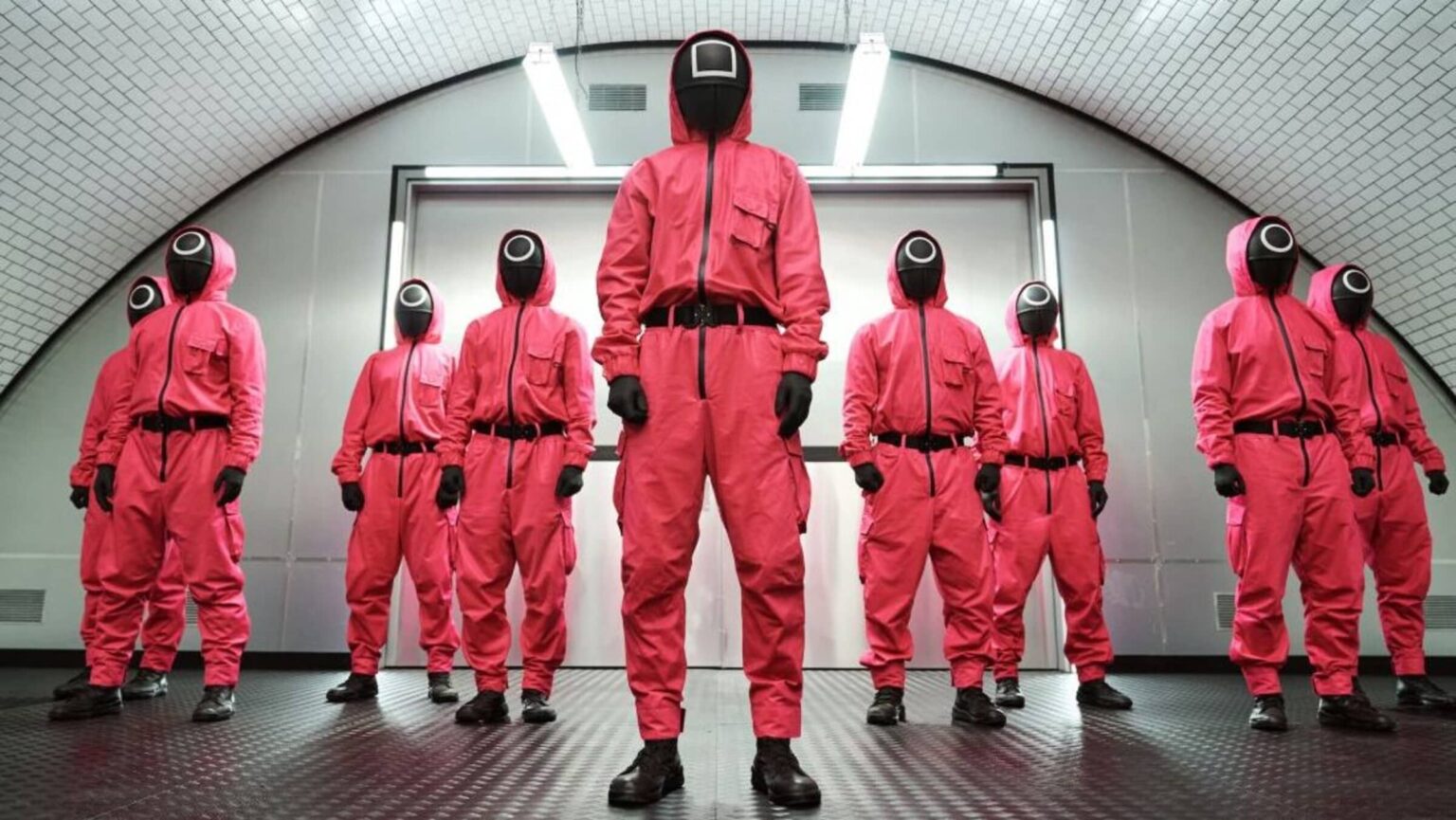
MrBeast, born James Donaldson, staged his version in late 2021. The twenty-five-minute video recreated every major set piece without the lethal consequences. A 456,000-dollar grand prize went to the winner, while each of the 456 participants received at least 2,000 dollars simply for showing up. The production ultimately tallied 3.5 million dollars, split between 2 million in set construction and 1.5 million in cash awards. The clip has since surpassed 939 million views and sits among his most-watched uploads. Reactions online praised the faithful replica of the pink-uniformed guards, the oversized piggy bank, and the towering doll that loomed over the courtyard. Mixed commentary also surfaced around the absence of danger and the sheer scale of the cash giveaway.
Squid Game Franchise Expansion
After the first season broke streaming records, Netflix green-lit two more chapters that kept the story moving toward its 2025 conclusion. Viewership spikes with each release underscored how the franchise evolved from a surprise hit into a global event series. The final season closed narrative threads while still delivering the same high-stakes tension that defined the original games. International markets reported simultaneous premieres and localized merchandise pushes, turning the property into a sustained revenue driver long after its debut.
Production Sponsorship and Business Model
MrBeast’s recreation carried a visible sponsor logo on the guards’ masks and scattered signage throughout the compound. Mobile-game company Supercell contributed roughly three million dollars to promote Brawl Stars, offsetting the bulk of construction and prize money. That arrangement shifted the project from pure spectacle to co-branded marketing vehicle. The model mirrored how traditional prestige dramas now court brand partners for partial funding, yet few reach the same per-minute spend that MrBeast achieved here.
MrBeast's Post-2021 Large-Scale Projects
The Squid Game video served as a proving ground. MrBeast later developed Beast Games, a multi-episode competition series for Amazon Prime Video that expanded the format to hundreds of contestants and multi-million-dollar prize pools. The move signaled a transition from single YouTube drops to serialized, platform-backed spectacles. Production values continued to climb, with larger crews, more elaborate sets, and tighter integration of sponsor messaging across each installment.
Cost Per Minute Comparison Update
Breaking the numbers down shows the gap in scale. MrBeast’s twenty-five-minute video lands at roughly 134,600 dollars per minute once the full 3.5-million-dollar budget is divided. By contrast, early 2021 estimates placed Squid Game around 43,500 dollars per minute across its nine-episode run. The difference reflects platform economics: a streamer spreads costs across global licensing windows, while a single YouTube upload must recoup everything through ad revenue and brand deals in one concentrated burst.
Years after upload, the recreation still circulates in highlight reels and reaction videos. Its endurance sits alongside the completed Netflix trilogy as a parallel artifact of the same cultural moment, each version shaped by different budgets, audiences, and distribution rules. The original series wrapped its story in 2025; MrBeast’s version keeps running in the background, a reminder that even children’s games carry real production ledgers.
