Alec Baldwin bashed for casting as disabled man in ‘Blind’
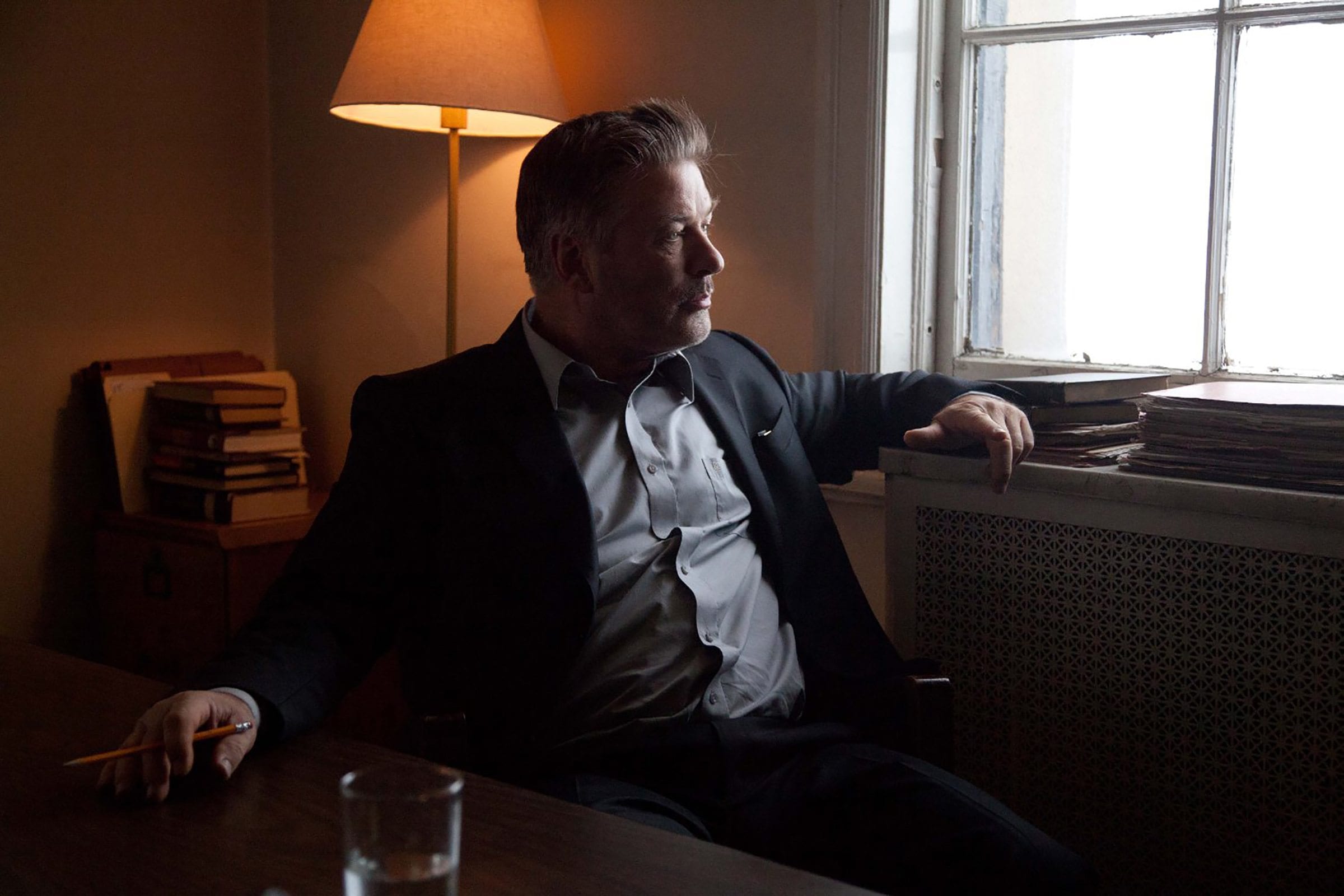
Prominent organization The Ruderman Family Foundation has criticized the casting of Alec Baldwin (Beetlejuice) as a disabled character in upcoming film Blind.
The film tells the story of a novelist who is left blind and widowed after a car accident. A socialite (Demi Moore) must read to him as part of a plea bargain, and the pair begins a love affair. Casting able-bodied Baldwin in the lead role has led The Ruderman Family Foundation, a leading advocate for the disabled, to dub the casting as “crip-face”, a term in line with the much-criticized blackface from the early 20th century.
“Alec Baldwin in Blind is just the latest example of treating disability as a costume”, Jay Ruderman, the foundation’s president, said in a statement. “We no longer find it acceptable for white actors to portray black characters. Disability as a costume needs to also become universally unacceptable.”
The organization previously called out the 2016 film Me Before You, about a paralyzed man seeking assisted suicide. They criticized the narrative for spreading a “deeply troubling message about people with disabilities” and for casting able-bodied Sam Claflin (Pirates of the Caribbean: On Stranger Tides).
Blind film status and release
The 2017 release marked a completed project rather than an active controversy. Directed by Michael Mailer, Blind premiered at the Woodstock Film Festival before Vertical Entertainment opened it theatrically on July 14, 2017. Streaming and physical editions later appeared on platforms including Prime Video, shifting the conversation from casting headlines to catalog availability.
The Ruderman White Paper reference
Last year, the foundation released the Ruderman White Paper on Employment of Actors With Disabilities in Television. It found that, despite 20% of the population having a disability, 95% of disabled characters on television are played by able-bodied performers. The 20% population figure remains consistent in foundation materials, while a 2025 Ruderman and Geena Davis Institute report placed disabled characters at 3.9% across 350 series examined from 2016 to 2023.
Industry Progress Since 2017
NBCUniversal, Paramount, CBS, and Sony Pictures have adopted Ruderman guidelines for auditioning actors with disabilities. In 2026, the foundation honored productions like Code of Silence and Pulse for authentic disability portrayals, showing measurable studio commitments that extend beyond the original statement on Baldwin.
Updated Representation Statistics
2025 Ruderman/Geena Davis Institute report: 3.9% of TV characters portrayed with a disability across 350 series (2016-2023). Earlier Ruderman data noted 95% of disabled characters played by able-bodied actors; population baseline remains ~20%. These figures place the original white paper findings alongside later measurements that track incremental movement rather than static conditions.
Marlee Matlin section
Deaf actress Marlee Matlin (The One I Love) spoke at the foundation’s first Studio-Wide Roundtable on Disability-Inclusion in November. She won an Oscar in 1986 for her performance in Children of a Lesser God and is perhaps the most acclaimed and recognized disabled actress. Matlin asked Hollywood to give disabled actors a chance and include the group when speaking about diversity on screen. Matlin spoke at 2025 Academy Museum events on captions and accessibility transforming storytelling, extending the same themes into later years.
Marlee Matlin's Ongoing Advocacy
Matlin spoke at 2025 Academy Museum events on captions and accessibility transforming storytelling. Named 2026 university commencement speaker for her work breaking barriers for performers with disabilities, she has sustained public calls for authentic casting that align with the foundation’s earlier roundtable message.
Broader Hollywood Response and Union Efforts
SAG-AFTRA has noted disability as 'consistently overlooked' with onscreen character percentages remaining low. 2022 Nielsen data cited by SAG-AFTRA showed 8.8% screen time share for people with disabilities, adding union-level documentation to the conversation that began with the foundation’s 2017 statement.
“Diversity is a beautiful, absolutely wonderful thing”, she told the LA Times. “But I don't think they consider people with disabilities and deaf and hard of hearing people as part of the diversity mandate.” We’re not sure exactly what mandate she’s referring to, but it couldn’t hurt for casting directors to start their searches in casting disabled characters among disabled talent.