Isabela Costa On Experimental Filmmaking And The Power Of Magical Realism
Isabela Costa has spent years threading the real and the unreal together, letting the strange surface inside ordinary moments without breaking the frame. Her work moves between experimental shorts, still photography, and layered moving images, all of it anchored in Los Angeles but increasingly shaped by transatlantic travel and new festival circuits.
Recent Experimental Works and Animation
Since finishing her earlier shorts, Costa directed a dialogue-free experimental animated piece that runs roughly eight minutes and forty seconds. The film builds a dystopian universe where expectations and anxiety press against the characters until the surface cracks. It screened in the online programme at Filmfest Dresden and moved through additional festival circuits that favor non-narrative and hybrid forms. The project continues her habit of letting image and sound lead rather than dialogue or plot.
Current Base and International Presence
Costa was born in Brazil and trained at CalArts in Los Angeles, where she completed four short films during her MFA. Recent profiles place her with active ties to Paris alongside her earlier California base, allowing her to keep one foot in each city while her work travels. The shift has opened new festival doors without loosening the connection to Rio that still surfaces in her framing and color choices.
Ongoing Fashion Editorial Contributions
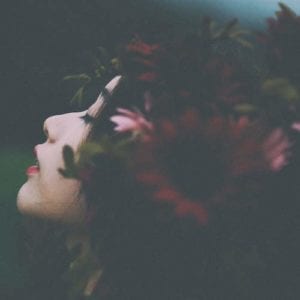
Her editorial photography for VULKAN Magazine and BELLO Media Group has continued through 2024 and into 2026. She still shoots on film, preferring the uncertainty of the negative over repeated digital takes. Recent spreads keep the same discomfort she first described, using salt, coffee, and crystal objects to fracture the frame and pull viewers away from polished surfaces.
Festival Programming and Guest Roles
Alongside her own screenings, Costa has taken on guest and programming roles at festivals including LUX Film Fest. These appearances let her speak directly about process and curation rather than only showing finished work. The move from participant to programmer mirrors the way her own films now sit between narrative and abstraction.
The interview below keeps its original shape, preserving Costa’s own words on magical realism, her influences, and the techniques that still guide her. Only the closing section on future plans has been refreshed to reflect completed projects and newer activity.
What is magical realism? Isabela Costa: Ahh there are so many ways to define this! For me, I personally like to define it as finding the absurd in our reality. I believe that reality is usually determined by the mundane, rational aspects of our lives that lead us down linear paths. What magical realism does is find what is absurd in society and address it. It is a way to break down the rules of materialism as we view them in order to shed a different light on our ‘regular’ world.
Who are the trailblazers of this movement? For me the biggest influence in this realm is Julio Cortázar, an Argentinian writer. The way that he can play with the linear timeline of story is incredible, jumping around in time and space to create brilliant pieces of literature that lend themselves to cinematic marvels. I first became aware of him actually by watching ‘Blow Up’ by the great Michelangelo Antonini which was based on one of Cortázar’s pieces. The way that they were able to change the very format of the restrictive linear narrative has a sense of pure freedom characteristic of the 1960s. From there I continued exploring more of his works and fell in love with the novels Rayuela and Hopscotch.
Do you feel magical realism is a part of Latin culture? Yes, magical realism has a very powerful legacy in Latin America, which probably explains my interest in the genre. Sometimes it is hard to decide if an artwork belongs to magical realism, surrealism or speculative fiction. Artists like Alejandro Jodorowrsky and known as surrealists can easily be considered artists of magical realism. Take ‘Belle de Jour’ by surrealist master Buñuel which portrays mundane reality but confronts the viewers with surreal disruptions as Catherine Deneuve’s character experience the raw essence of sex work. I believe that magical realism is a category that is more digestible to the masses as it bridges the gap between sometimes difficult to comprehend surrealist works such as ‘Un Chien Andalou.’
Can you give us examples of magical realism in American productions? Two examples come to mind, the first is the series ‘Twin Peaks’ by David Lynch. Lynch beautifully dives into the mystery surrounding Laura Palmer and addresses the possibility that an American Sweetheart can look perfect on the outside but be so broken on the inside. Her disappearance is haunting for the small town she inhabited which is the perfect amalgamation of American society. It makes the viewer question what goes beyond surface appearances and was ultimately the reason for the show's success. The other example that sticks out is ‘Eternal Sunshine of the Spotless Mind,’ this movie delves into the pathos of heartbreak. The film highlights the desire as a society to avoid emotional work rather than to face it head on and evolve through the process. It beautifully shows how just erasing heartbreaks and bad memories does not make our daily life easier. As a whole the absurdity has a vein of comic relief which allows the viewer to connect on a wholly different level.
How do you use magical realism in your artwork? I think that my current work is less specified towards a genre, and I have a looser format for my work that feels more organic. I was a lead filmmaker behind the short film ‘I Think We’re Alone Now,’ where we carefully crafted every element of the short film to be based in magical realism. As the two protagonists find themselves in the ghostly city of Rio de Janeiro, their freedom from external judgment turns slowly into isolation. But now I like to enjoy the process more than trying to define the genre that I am working in. The short film was supported and produced by ANCINE (Brazilian government agency for film) and has been featured at numerous international film festivals include the Fringe Film Festival and the Festival Lugar de Mulher é no Cinema. Having the support of PUC-Rio through their selective ANCINE award program was an important and meaningful acknowledgment of the important work and impact that we were making with our film.
Can you discuss your new approach and process? For my more recent projects such as ‘Living Fish’ and ‘Eternity on a Loop,’ I have gone with a looser format that feels more organic. Instead of trying to fit things into a specific genre, I like to approach reality from a distorted perspective questioning the basic rules of the world. The protagonist in each film refuses to view the world in the conventional manner. I filmed both of them without a script which helped to imbue the narrative with visual sensations as opposed to a circular premise. This allowed me to test the boundaries of how a story is told, but also let the films speak for themselves, as I made them slowly and edited them as I filmed them and wrote the narration. I am happy to say that this deviation from traditional filmmaking was rewarded and recognized by countless distinguished festivals and critics around the world, including an award at the 2022 BeiJing Film Awards, the Spotlight Award at the 2023 Concordia Film Festival, an honorable mention at the Ithaca Experimental Film Festival, and another award at the 2024 ARFF Paris. This high level of recognition and achievement provided me with the necessary platform to highlight my unique and transformative approach to visual art and filmmaking. Using this success and platform, I hope to inspire other fellow visual artists to take that leap. Films have since screened at additional festivals including Lausanne Underground, with ongoing experimental output.
Who were some of your influences when making those films? During the filmmaking process of ‘Eternity on a Loop’, I was very attracted by the Mexican surrealist Leonora Carrignton’s paintings. There is something so gloomy and enigmatic in the atmosphere of her artwork. Carrington’s work was the starting point for my examination of alienation and religion, and I was even influenced by her color palette. ‘Living Fish’ was my first expression of love for 35mm photography. At the time I was very taken by the delicate and mysterious feminine images of Francesca Woodman. This interest was combined with films that combined still images such as the canon ‘La Jetee’ which influenced my understanding of time and helped to create ‘Living Fish.’
Can you talk about some of your more recent influences in film? Currently I have found my work grounded more in reality. My latest films ‘Ana & Oto’ as well as ‘Somewhere Else’ are my way of viewing Rio de Janeiro and Los Angeles through characters that uniquely reflect those cities to me. The way that I choose to shoot those cities shifts constantly between material and abstract. I try to not rely on a plot twist which would be characteristic of magical realism.
What inspires your photography? In photography there is a huge space for bringing disorder to reality through still images of frozen action. For my editorials for BELLO Media Group featuring leading talent such as Haley Dahl, Isabella Lalonde, and Djouliet Amara, to name a few, I try to evoke an escape from reality that is not quite surreal but does create a level of discomfort. I have begun to enjoy playing around with developing art with different methods. You can really play around with negatives by adding different substances, such as salt and coffee, to them evoking new layers and meanings.
Let’s talk about layering images in film and video, what techniques do you use? I work in a lot of different mediums which I enjoy mixing and matching to create different effects that help to tell the story of what I am shooting. For me being an artist means not just sticking directly to the script and shooting straight on but rather mixing in a variety of different shots which help to guide the story. For my latest film ‘Ana & Oto’ I filmed in 16mm, but it incorporates my own animated collages, some archived footage from Rio De Janeiro and 35mm stills. I have been impacted profoundly by Brazilian Cinema Marginal and French New Wave and feel as if ‘Ana and Oto’ is a nod to that. Being able to mix concepts and play with mediums leads to more texture and artistry I believe. I believe that filmmaking should be innovative, and I like to shoot without a script allowing the artistry to take the lead as opposed to shooting for the storyline alone.
How do you bring an experimental edge to your work in the fashion world? For me, I believe that experimenting is defined but any process outside of the traditional guidelines of the artwork. My entire fashion portfolio is analogic pictures, because I believe that it represents a freedom that is often lost in digital work. Without having knowledge of exactly what the finished product will look like, it negates shooting the same pose multiple times and just erasing the ‘mistakes.’ It also allows for more experimentation; at the moment I am working with a fake crystal home decor object that I am positioning in front of the lens to create some cool effects. It duplicates the objects the lens is pointed at and creates a whole new layer to the photograph. It feels to me like experimenting allows me to bring out my spontaneous and playful side which is nice disconnect from the ultra-curated and overly digitized world we currently live in.
Would you say you create a dreamy quality? In my work, I like to create a break from reality, and by that, I mean a break from the linear aspect of the real world. I play with the construct of time and space and distort it to represent a dreamlike quality. If the real world ceased to work in a linear fashion with time being constant then it would collapse, however in dreams it is possible to bend that reality. I try to emulate that in my work which helps to provide the viewer with a level of discomfort that engages the audience more and creates an ethereal quality to my work.
What is next for you? Experimental filmmaking is at the core of what do. I spent three years getting my MFA in film and Video and that has further solidified my love for the art. However, as things tend to go, I explored new projects and jobs and found a genuine passion for Fashion Editorial Photography blossomed and it is something that I am enjoying exploring. I plan to continue to work in the fashion world without ever forgetting my roots and continuing important filming projects. I also do freelance jobs editing for other people and it keeps me in the film world. Article notes she was nearly finished with 'Somewhere Else'; later references confirm ongoing editing or related documentary-style work on LA female artists. Post-interview activity includes new shorts and continued festival participation. Check out Isabela Costa’s work on her website isabelacostafilm.com.