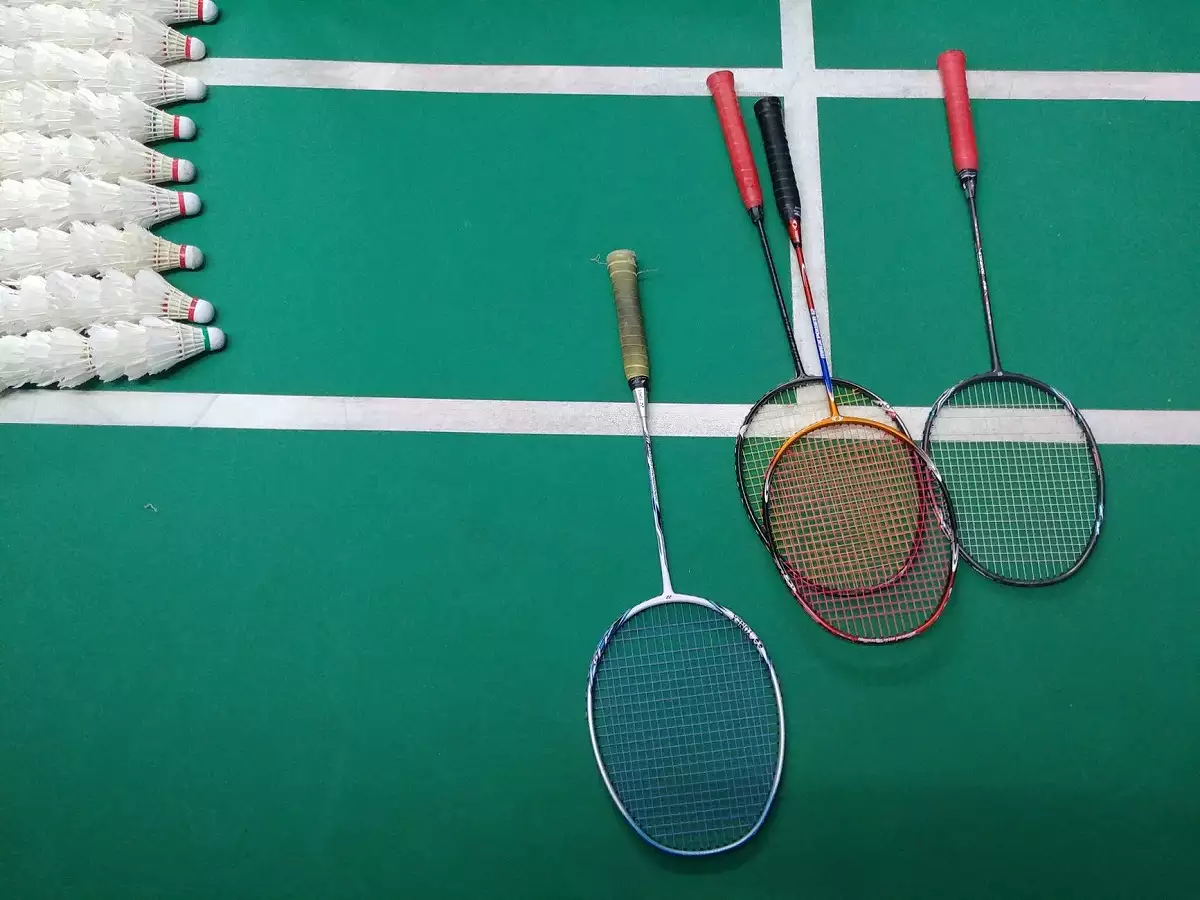
How To Choose the Best Badminton Racket for Your Style
Choosing the proper badminton racket is essential for players of all experience levels, whether you're a novice or an accomplished pro. Your playing, power, control, and overall pleasure of the sport can all be dramatically impacted by the racket you select. Determining which badminton racket is the best fit for your playing style can be overwhelming, given the wide range of alternatives on the market. This article tries to give you a thorough overview of the process of selecting the best badminton racket, taking into account elements like weight, balance, string tension, grip size, and material composition.
Determine Your Skill Level and Playing Style
The first step in selecting the ideal badminton racket is to determine your degree of expertise and playing preferences. To meet the needs of various players, rackets are made with a variety of particular features. Beginners could benefit from a racket with a bigger sweet spot and more forgiveness, while more experienced players might prefer one with more control and maneuverability.
Understand Shaft Flex and Stiffness
Shaft flex influences how much power transfers through each swing. Flexible shafts bend more on impact and return stored energy, which helps beginners and intermediate players generate power without needing perfect timing. Stiffer shafts transmit force more directly and reward clean contact, giving advanced players tighter control and quicker recovery between shots. Most buying guides now list flex ratings alongside weight and balance because the wrong shaft can cancel out the benefits of a well-matched head shape or string setup.
Consider the Weight and Balance
When choosing a racket, weight and balance are important considerations. Badminton rackets weigh between 70 and 100 grams unstrung. Lighter models in the 5U and 6U range, 70 to 79 grams, allow faster swings and quicker reactions at the net. Heavier 3U frames, 85 to 89 grams, add mass that can increase power on clears and smashes. Many players settle on 4U rackets, 80 to 84 grams, as a workable middle ground for most club play.
In general, rackets can be classified as head-heavy, head-light, or balanced. Rackets with a heavier head provide more power for smashes and clears since more of their weight is concentrated there. Head-light rackets offer superior maneuverability and control, making them perfect for players who depend on quick reflexes and swift net play. Rackets that are well-balanced provide a good mix of power and control. Balance points are often listed in millimeters from the grip end so buyers can compare models directly.
Consider Budget and Value Options
Entry-level aluminum rackets usually fall between fifteen and forty dollars. They hold up for casual use but limit string tension and feel heavier over long sessions. Graphite and carbon-fiber frames start around fifty dollars and climb past one hundred sixty for premium builds. Mid-range graphite models often deliver the best longevity for recreational players who want decent power and control without spending top dollar. Many coaches suggest buying once in this range rather than replacing cheap rackets every season.
Evaluate String Tension
An essential factor in a racket's performance is string tension. Greater strength and skill are needed to generate power with higher string tension, but it also offers greater control and accuracy. The increased power is possible with less string tension, but some control is lost. Beginners often start between 18 and 24 pounds for forgiveness and easier power, while advanced players move into 24 to 28 pounds or higher once their racket construction can handle the load. Always stay under the manufacturer's maximum rating printed on the shaft.
Account for Playing Format (Singles vs Doubles)
Singles and doubles place different demands on racket choice. Singles rallies stretch longer and reward steady power, so a slightly heavier head-heavy frame can help push opponents to the back line. Doubles favors quick exchanges at the net and rapid defense, where lighter head-light rackets make it easier to change direction and block smashes. Players who switch formats regularly often keep two rackets with different weight and balance profiles rather than forcing one setup to cover both styles.
Assess Grip Size
A racket's grip size has an impact on comfort and control. By selecting the proper grip size, you can ensure a firm grip and reduce your chance of suffering from strains or blisters. Measure the distance between the base of your palm and the tip of your ring finger to estimate the size of your grip. Standard sizes run from G5 at roughly 83 millimeters circumference to G2 at about 92 millimeters. G4 and G5 remain the most common defaults. Overgrips add a few millimeters if a stock handle feels too small, and many players swap them between matches to maintain a consistent feel.
Emerging Technologies and Smart Features
Recent models include vibration-filtering inserts in the shaft and aerodynamic frame cuts that reduce drag during fast swings. A few 2026 rackets carry embedded sensor chips that track swing speed and shuttle contact through a phone app. These tools stay optional for most club players, yet they give data-driven feedback that was previously available only in coaching labs.
Analyze Racket Materials and Construction
Common materials used in the construction of badminton rackets include graphite, carbon fibre, and aluminium. Full carbon-fiber frames deliver the stiffness and low weight that competitive players expect. Aluminum remains an entry-level option that can take rough handling but adds mass and caps the tension it can safely hold. Composite builds sit between the two, offering decent performance at a lower price than pure carbon. Isometric heads continue to dominate because their larger sweet spot forgives off-center hits. Traditional oval frames still appear in some control-oriented models, though their smaller sweet spot demands more precise contact.
Seek Expert Advice and Test Rackets
For individualized advice, seek advice from seasoned players, trainers, or badminton speciality shops. They can offer insightful advice based on your playing style, physical characteristics, and skill level. Trying out many rackets before settling on one is also advantageous. You may evaluate a racket's performance on the court and how it feels in your hand by putting it through a testing process. Bring your usual shoes and strings so the test session matches real match conditions as closely as possible.
A wrap up
The best badminton racket should be chosen depending on your particular tastes, playing style, and level of expertise. You may reduce your selections and locate the ideal racket for you by taking into account elements like weight, balance, string tension, grip size, and material construction.
Always remember that power, control, and manoeuvrability must be balanced. Power is necessary for shots that are aggressive, while control and manoeuvrability enable accurate placement and quick responses. You may make an informed choice by trying out various rackets and consulting an expert.
Your performance and enjoyment of the game can be significantly improved by purchasing a high-quality badminton racket that fits your playing style. Spend some time investigating and testing various rackets, and don't be afraid to ask experts for advice. You'll be well-equipped to advance your badminton abilities if you have the correct racket in your possession.
Therefore, go ahead and pick out your ideal badminton racket, get onto the court, and realize your full potential in this thrilling and dynamic sport. Have fun playing!