Eureka to release “definitive version” of Lang’s ‘Metropolis’
Eureka Entertainment marked the 90th anniversary of Fritz Lang’s Metropolis with a “stunning” new version of the film set to be released on September 25th. The limited boxed set arrived as a special edition in the Masters of Cinema line and offered collectors a substantial package built around the most complete print then available.
The centerpiece remained the 150-minute reconstruction completed in 2010. That version restored roughly twenty-five minutes of footage long believed lost, bringing the running time closer to Lang’s original cut and giving modern audiences a clearer sense of the film’s intended scope and pacing.
Eureka loaded the release with extras that underscored its archival ambitions. A 100-page book and hardbound slipcase accompanied several documentaries, among them The Fading Image, which followed the behind-the-scenes work on Giorgio Moroder’s restoration and scoring. Moroder’s own 1984 re-imagining of Metropolis, complete with his custom soundtrack, also sat inside the box.
Release details and timing
The September 25 street date aligned with the 2017 anniversary push. No comparable new Eureka edition has surfaced since, leaving that particular set as the definitive physical presentation tied to the ninetieth year. Its 2,000-copy worldwide run and newly commissioned artwork quickly turned it into a collector staple.
Restoration context
The 2010 cut, supervised by the Friedrich-Wilhelm-Murnau Foundation, continues to serve as the reference standard. Its recovery of the Buenos Aires reels and its 150-minute length remain unchanged benchmarks, and recent festival screenings still cite the Murnau version as authoritative rather than provisional.
Centenary Celebrations and Live Performances
Attention now turns to the 2027 centenary. Several orchestras have scheduled full screenings timed to the January 10 anniversary, including a Metropolis 2027 project featuring a reconstructed score performed live by the Babylon Orchester Berlin. Additional ensembles are exploring new arrangements and even crowdsourced soundtrack experiments to mark the milestone.
The 2010 Restoration's Enduring Legacy
Footage recovered in Buenos Aires allowed the 2010 team to reassemble scenes that had been missing for decades, bringing the film nearer to Lang’s original structure. That same cut keeps appearing in 2026 programming, confirming its status as the version most programmers and archivists trust when presenting the title to new audiences.
Metropolis in 2026: Cultural Resonance
The story is set in the year 2026, a coincidence that has invited fresh commentary this calendar year. Writers and curators regularly invoke the film when discussing artificial intelligence, vertical cities, and widening class divides, noting how its visual language still shapes conversations around technology and urban planning.
Preservation and Global Recognition
UNESCO placed Metropolis on its Memory of the World Register in 2001, and that designation has remained in place without amendment. The Murnau Foundation continues its long-term stewardship, overseeing both the physical elements and periodic digital upgrades that keep the 2010 reconstruction accessible for study and exhibition.
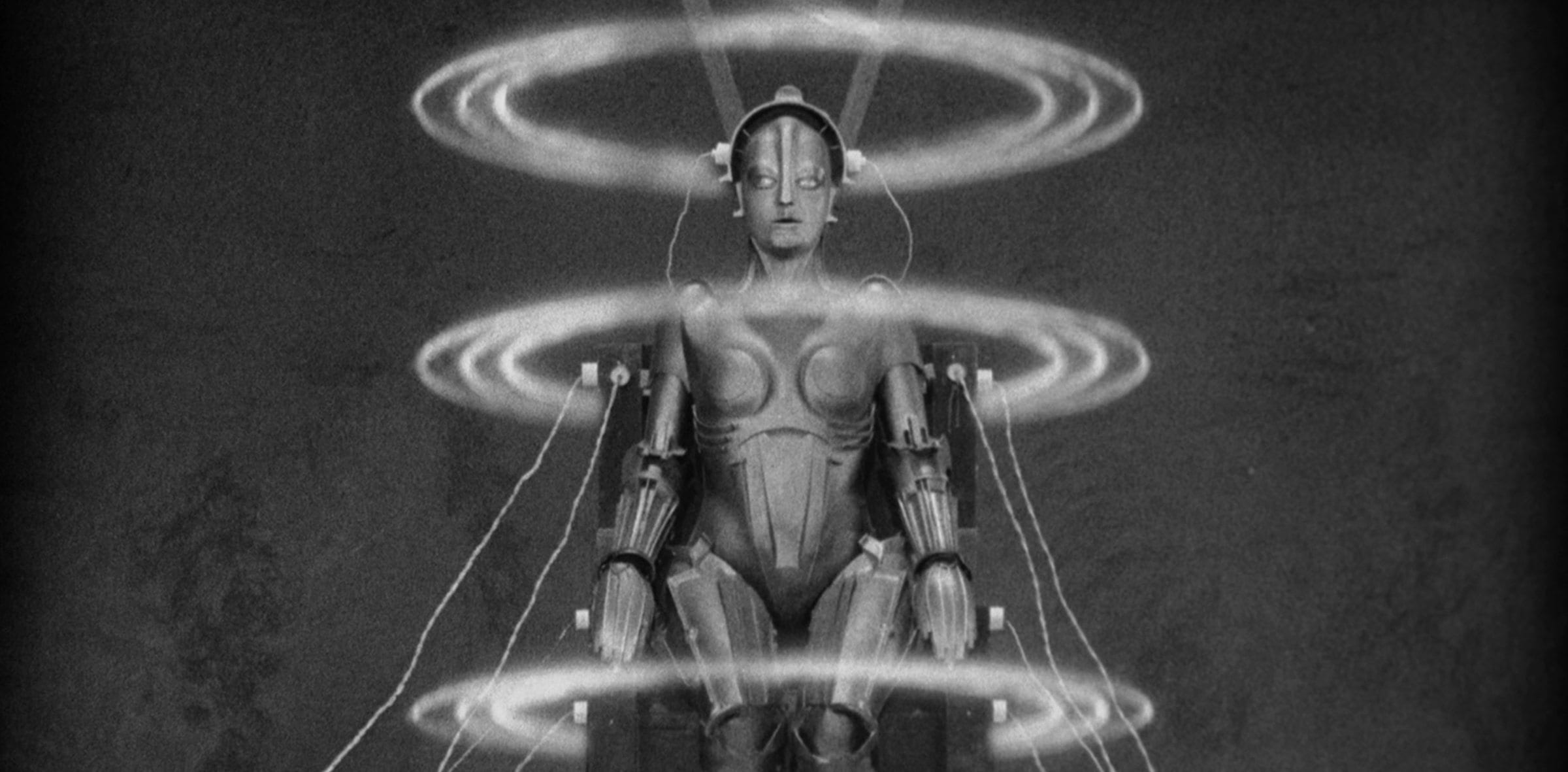
Metropolis was written in collaboration between Lang and his wife, Thea von Harbou, whose script framed a divided metropolis ruled by towering elites while workers toiled below. The narrative pivoted on a seductive robot, the Maschinenmensch, whose creation blurred lines between human and machine. The cast featured Gustav Fröhlich as the idealistic Freder, Brigitte Helm in the dual role of Maria and the false Maria, Alfred Abel as the industrialist Joh Fredersen, and Rudolf Klein-Rogge as the inventor Rotwang. Supporting players included actors drawn from Lang’s earlier successes such as Dr. Mabuse: The Gambler and Spies.
Contemporary reviews already recognized the film’s scale. Luis Buñuel called the premiere cut “a captivating symphony of movement,” and the picture quickly entered the canon of German cinema. Its influence reached forward to Blade Runner and Star Wars, both of which borrowed its cityscapes, robot iconography, and cautionary tone about unchecked technology.
The original 1927 cut suffered heavy editing after its Berlin debut, and the premiere negative disappeared. Reconstructions begun after 2007 gradually reassembled the missing passages, culminating in the 2010 edition that restored the narrative flow Lang intended. That version, paired with Gottfried Huppertz’s original score, remains the one most frequently projected today.
Metropolis earned its place on the UNESCO register after a 2001 Berlin Film Festival presentation of an earlier reconstruction. The inscription recognized both the film’s artistic significance and the international effort required to preserve it. No later inscription has superseded that status, and the title continues to serve as a touchstone for silent-era scholarship.
Collectors still seek the Eureka set for its combination of the 2010 reconstruction, the Moroder variant, and the accompanying book that documents both projects. With the 2027 centenary on the horizon, the 2017 edition stands as the most comprehensive physical record assembled during the film’s first century, while live orchestral presentations promise to carry its imagery and music into the next.