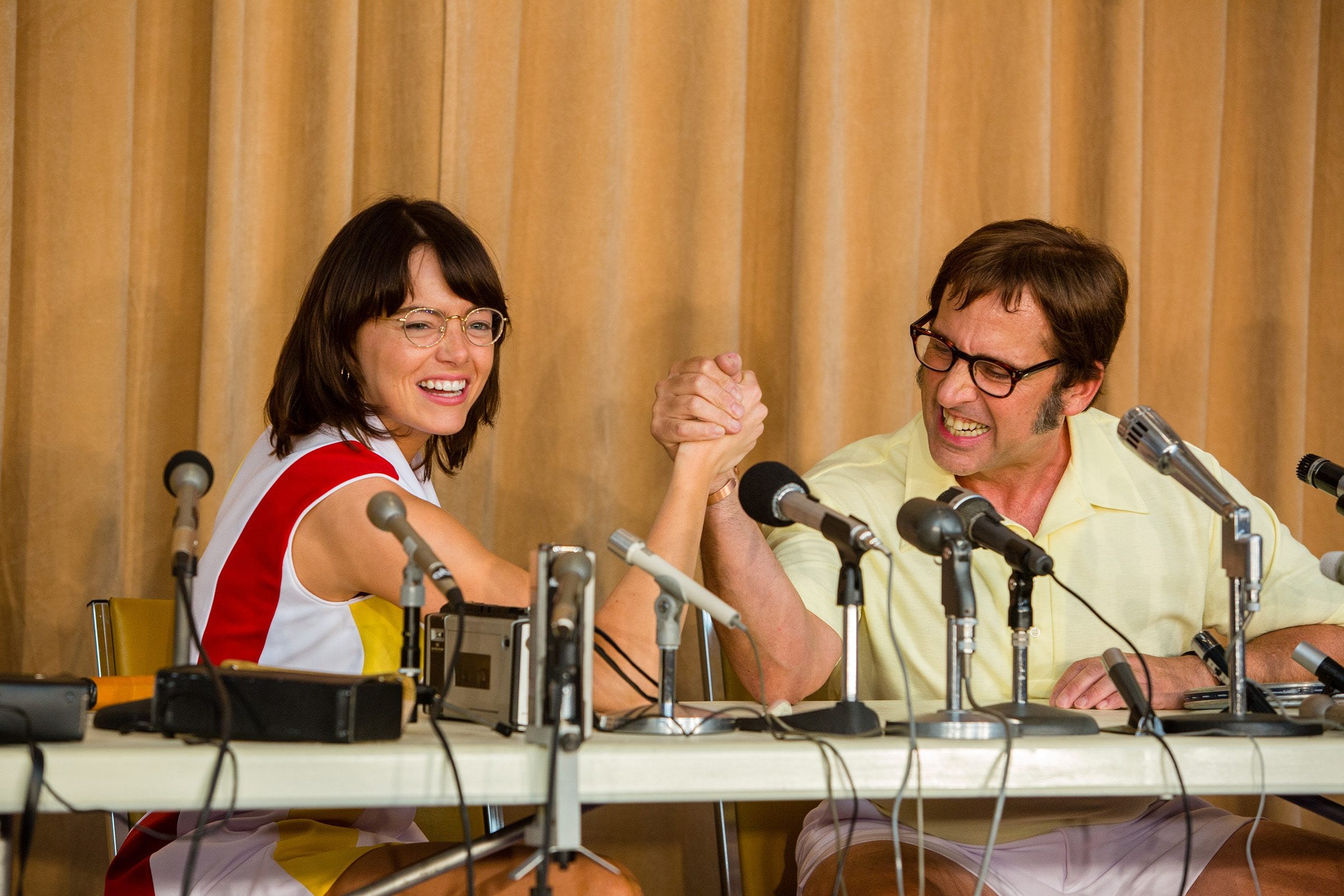
Emma Stone’s male co-stars take pay cut to even the gender score
Emma Stone once described how male co-stars had taken pay cuts to bring her compensation in line with theirs. The remarks surfaced during promotion for Battle of the Sexes, the 2017 film in which she portrayed Billie Jean King opposite Steve Carell as Bobby Riggs. Her comments remain the clearest public account she has given on the subject.
Stone's 2017 Comments on Co-Star Pay Cuts
“In my career so far, I’ve needed my male co-stars to take a pay cut so that I may have parity with them,” she told Out Magazine. “And that’s something they do for me because they feel it’s what’s right and fair. That’s something that’s also not discussed, necessarily: that our getting equal pay is going to require people to selflessly say, ‘That’s what’s fair.’” Stone did not name the actors involved. She framed the gestures as private decisions made to correct an imbalance that studios had already set.
Battle of the Sexes Context and Election Parallels
Stone (The Help, Birdman, La La Land) played feminist icon Billie Jean King against Carell’s chauvinistic Bobby Riggs. The 1973 exhibition match ended with King’s decisive victory, a moment long viewed as a cultural win for women in sports. Filming began in spring 2016, and Stone later noted the overlap with the presidential campaign between Hillary Clinton and Donald Trump. She described watching Carell’s self-absorbed character square off against her own accomplished one while the real election cycle played out in the background.
Criticism from Abigail Chandler
Journalist Abigail Chandler points out that voluntary cuts by male actors leave studios in a stronger position. “When male actors take a pay cut in solidarity with their female co-stars, the studio is just winning twice – first when they underpaid the leading lady, and second when their male lead slashed his own salary.” Chandler’s 2017 Metro column treated the solidarity as admirable yet insufficient to shift structural pay practices.
Quantifying the Hollywood Gender Pay Gap
Peer-reviewed studies of film salaries from 1980 to 2015 found an unexplained gap of roughly one million dollars per picture for female leads even after researchers adjusted for experience, budget, and prior box-office performance. A later 2025 analysis of the same dataset showed the unexplained difference had grown past two million dollars per film, with action projects cited as a primary driver of the disparity. These figures place Stone’s individual experience inside a wider pattern that persisted well after her interview.
Evolution of Pay Equity Discussions in Hollywood
The 2017 remarks arrived during a period of growing public attention to compensation, yet they preceded the larger industry reckonings that followed. Subsequent years brought increased calls for salary transparency and contract reviews, but published accounts have not documented additional named instances of male co-stars publicly accepting reduced pay to match female counterparts. The absence of follow-up examples suggests such arrangements stayed private or became less common once scrutiny intensified.
Broader U.S. Gender Earnings Trends
National data offers a larger frame. U.S. Census figures show the earnings ratio for full-time workers reached 83 percent by 2024. Projections based on current movement place full national parity decades away. While the entertainment industry operates under different contract structures, the slower national pace illustrates how incremental individual adjustments rarely close aggregate gaps on their own.
Critiques of Individual Solidarity Measures
Policy analysts and labor researchers have argued that isolated pay cuts allow studios to maintain initial low offers without revising the budgets or formulas that produce those offers. Studies of compensation patterns continue to highlight structural elements such as genre allocation and financing decisions rather than negotiation outcomes between individual performers. These critiques echo Chandler’s earlier observation that voluntary gestures by actors leave the underlying studio arithmetic untouched.
Stone’s account from 2017 stands as a specific data point inside a longer record of salary research and industry commentary. The numbers that followed indicate the scale of the disparity she described, while later assessments show that one-off adjustments have not produced measurable, sustained shifts in how compensation is initially set.