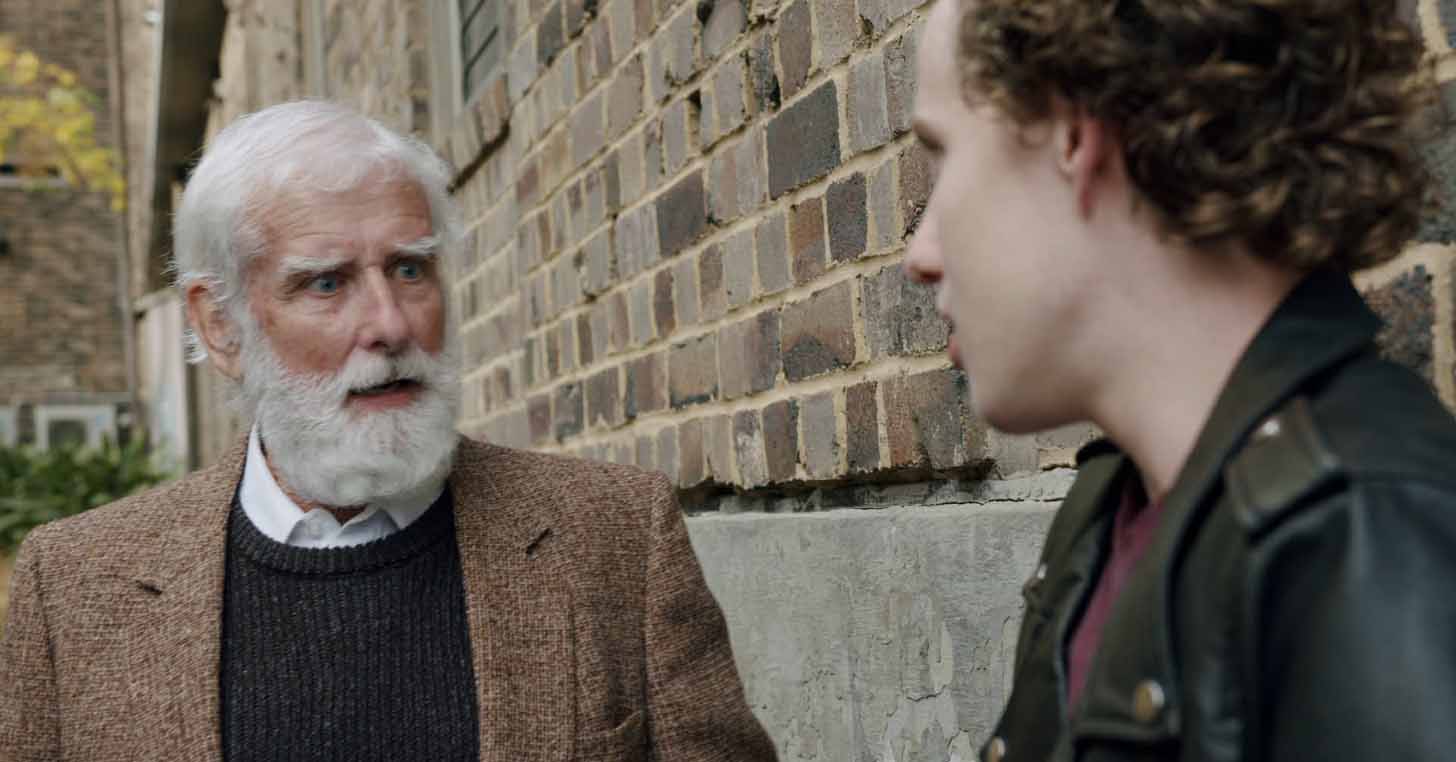
Get a laugh watching the short film ‘The Dealer on Campus’
The short film The Dealer on Campus revives an old gag about kids turning playground hustles into something bigger. Director Susan Daniel updates the formula with a power-tripping principal, a card-trading student, and a mom ready to go full Karen, all set inside the walls of Wilson Street High.
The result stays light and fast, echoing the comic timing of 1980s teen movies while mixing in sharper contemporary edges. In under ten minutes the piece lands its laughs without overstaying its welcome.
The power-hungry principal vs. the nerdy student
Principal Phil Johnson has spent months trying to pin something on Giles Saxon Reeves, the quiet kid who keeps his head down and his cards close. When Johnson catches another student tagging school property, he offers a deal: information on Giles in exchange for walking away clean. The tip points to a transaction behind the gym, and Johnson assumes the worst.
Giles is not moving drugs. He is trading Monster Magic Cards, a fictional collectible game whose rules matter more to him than any hallway drama. The principal’s overreach turns a harmless hobby into a stakeout, and the collision between adult suspicion and teenage obsession drives the short’s central joke.
80s high school comedy mixed with Sex Education
Daniel has cited John Hughes films, Sex Education, and American Vandal as touchstones. She recreates the scuffed hallways and institutional gloom of those stories while letting the characters behave like real people caught in small stakes. The principal’s bumbling surveillance and the mother’s protective outrage feel lifted from an earlier era, yet the dialogue stays current.
Daniel continues that comedic voice outside narrative work, posting parody sketches on YouTube that keep the same quick rhythm and character exaggeration. The consistency shows how the short film sits inside a larger practice rather than standing alone.
Festival Success and International Reach
After its 2020 release, The Dealer on Campus began a quiet festival run. It took Best Short at the Reale Film Festival Bi-Monthly Awards in 2022 and reached finalist status at the Seoul International Short Film Festival. Screenings followed in Tokyo, giving the film an international audience that the original production never anticipated.
The laurels sit on the FilmFreeway page alongside a clean festival history, proof that a modest student-style comedy can travel when the timing and tone line up. Each acceptance extended the life of a project that began as a classroom exercise.
Susan Daniel's Evolving Career and Recent Projects
Daniel’s credits have grown steadily since Randwick TAFE. She worked on the Australian series BUMP and AUSTIN, handling production tasks that sharpened her understanding of set logistics. Those experiences fed directly into her later shorts.
She directed Rose in 2023 and The Audition in 2025, both compact stories that test different tonal registers. Selection for the TIFF Director’s Lab in 2026 places her among emerging filmmakers preparing features, a clear step from the self-financed shorts that launched her behind-the-camera career.
Neurodivergence and Representation in Filmmaking
Daniel is autistic, has ADHD, and lives with OCD. She received an autism diagnosis at age four, long before she considered a life in film. The layered profile informs both the practical choices she makes on set and the themes she returns to in her writing.
She is signed with Zebedee Talent, an agency that represents performers and creators with disabilities or visible differences. Alongside narrative projects she posts parody content on YouTube as an openly neurodivergent creator, turning personal experience into accessible sketches that reach viewers who rarely see themselves reflected in traditional credits.
Where to Watch and Lasting Popularity
The full short remains on Daniel’s official YouTube channel, where it has passed 65,000 views and continues to accumulate plays years after its first festival screenings. The upload carries the same festival laurels listed on FilmFreeway, giving new viewers immediate context without extra searching.
Its steady numbers show that a tightly written comedy about trading cards and institutional overreach still finds an audience. For anyone curious about how a single short can open doors, the view count and subsequent projects tell the practical story.