


Breakthrough Innovation! the first solar electric scooter on the market: AOVO Lirpe R1
The AOVO Lirpe R1 sits at the intersection of electric mobility and solar charging, a practical option for riders who want cleaner daily transport without sacrificing convenience. Its removable battery and foldable solar panel accessory give users flexibility on the go, while the scooter itself remains compact enough for city streets and short commutes. The design keeps the focus on straightforward performance rather than flashy extras, which has helped it find an audience among commuters and weekend riders alike.
Introduction To AOVO Electric Scooter
The AOVO Lirpe R1 electric scooter uses a rechargeable lithium-ion battery paired with a separate foldable solar panel for supplemental charging. Real-world tests place the practical range around 15 to 17 miles, depending on rider weight, terrain, and speed settings. Top speeds in controlled reviews sit between 15 and 25 km/h, which keeps the scooter aligned with many local regulations while still offering usable pace for urban trips. The solar panel charges the removable battery when the scooter is parked, so riders can top up power without plugging into the grid every time.
The Emergence Of Solar-Powered Electric Scooters
Solar-assisted electric scooters combine a standard battery motor system with photovoltaic panels that feed additional energy into the pack. The approach cuts reliance on grid electricity and lowers operating emissions, especially in regions where the power mix still includes coal or gas. Manufacturers have experimented with integrated panels and accessory foldable units, though most current solar models remain small-volume or pilot projects rather than mass-market staples.

Real-World Performance and User Reviews
Owner feedback and independent tests show the standard Lirpe R1 delivering closer to 15-17 miles of range once variables like hills, payload, and temperature enter the equation. Top speeds in daily use often hover around 15-25 km/h, which feels steady for neighborhood streets and bike lanes. Riders note that the removable battery makes it easy to carry the pack inside for charging or to swap in a spare during longer outings. Several reviewers mention the scooter handles light cargo runs well when paired with an aftermarket basket, though the stock deck is best suited for a single rider.

Comparison with Other Solar or Eco E-Scooters
Other solar or hybrid e-scooters exist in small numbers, mostly from boutique or startup brands that position their models as premium or experimental. Higher-end entries advertise ranges well above 30 miles and top speeds that push past 30 mph, but those figures usually come with steeper price tags and larger frames. The Lirpe R1 stays in a more accessible bracket, emphasizing the solar accessory and modular battery over outright speed or distance. That keeps it competitive for buyers who want solar charging without moving into full-size electric motorcycle territory.
Benefits Of Solar Charging Electric Scooter
Electric scooters paired with solar charging deliver several practical advantages over grid-only models.
- Environmentally friendly – Solar charging electric scooters produce no tailpipe emissions and lower demand for electricity generated from fossil fuels.
- Cost-effective – Riders avoid repeated grid charges, which can add up over months of daily commuting.
- Convenient – A foldable panel lets owners charge wherever sunlight is available, reducing dependence on public charging stations.
- Low maintenance – Fewer moving parts than gas engines translate to simpler upkeep and lower long-term costs.
- Reliable – Solar-assisted packs keep working even if the local grid experiences outages, providing a backup power source during emergencies.
Maintenance and Battery Longevity
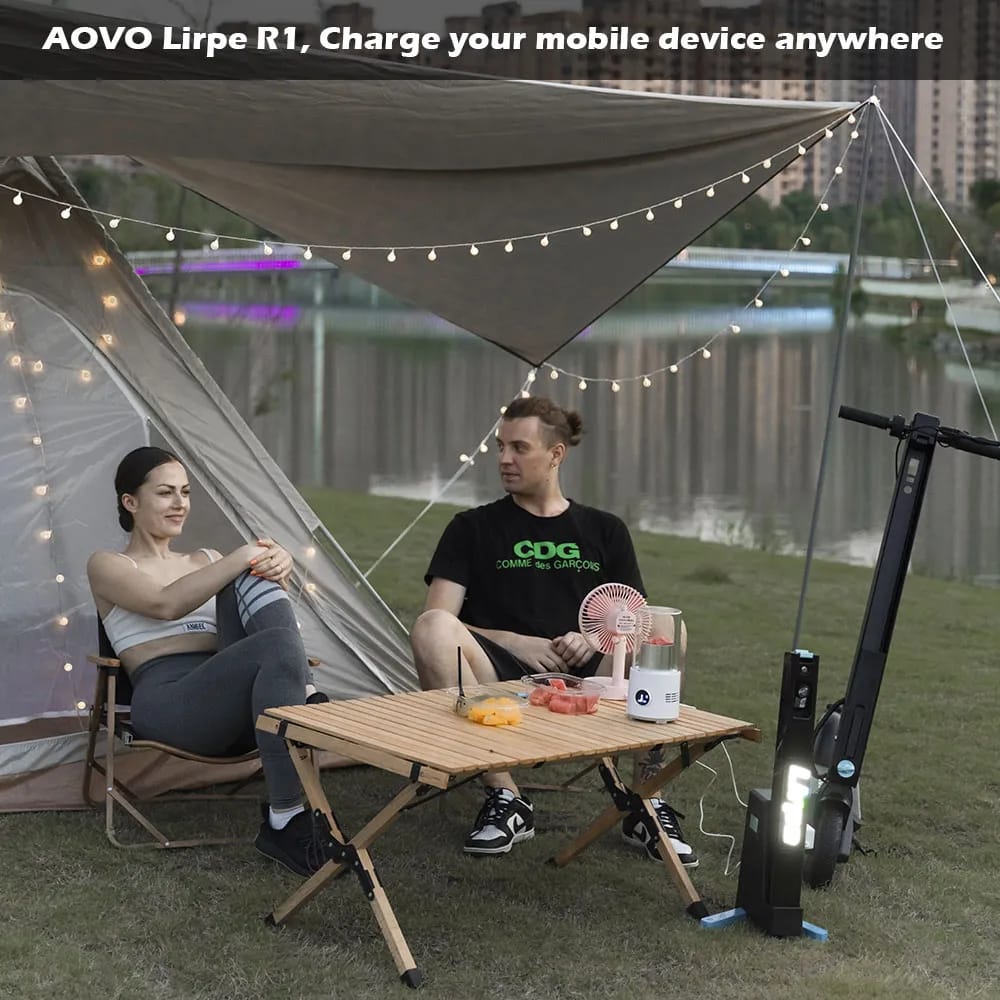
The removable battery on the Lirpe R1 also functions as a portable power station, letting riders charge phones, laptops, or camping lights while away from outlets. Solar charging cuts grid dependency, yet it still requires planning around daylight hours and weather. Owners report that storing the pack indoors when not in use helps preserve capacity over multiple seasons. Regular checks on tire pressure, brake pads, and the solar panel connection points keep the system running smoothly without specialized tools.
Environmental Impact and Sustainability Metrics
Solar charging reduces the scooter’s draw on non-renewable electricity sources, which matters in regions where the grid still leans on fossil fuels. Market analyses describe solar-integrated e-scooters as a small but expanding sustainability niche rather than a dominant category. The incremental carbon savings come mainly from avoided grid charging over the scooter’s lifespan, though the overall footprint also depends on manufacturing materials and end-of-life battery recycling programs.
AOVO Lirpe R1, The First Solar Electric Scooter
The AOVO Lirpe R1 combines a 350W motor with a 36V lithium-ion battery and a foldable solar panel accessory. The scooter’s aluminum frame keeps weight manageable for carrying up stairs or into apartments, while the digital display shows speed, remaining range, and battery percentage at a glance. LED lights front and rear improve visibility after dark, and the USB port lets riders top up devices without extra adapters.
How Does AOVO Lirpe R1 Work?
The Lirpe R1 operates on a standard electric scooter platform with the added option of solar input. Riders remove the battery pack and connect it to the foldable solar panel when parked. The panel converts sunlight into direct current that replenishes the cells, extending usable range without a wall outlet. Once reinstalled, the battery powers the 350W motor through a simple throttle-and-brake interface on the handlebars.
Features of AOVO Lirpe R1
The standard model runs a 350W brushless motor paired with an 8.5-inch wheel set and a 36V 7.8Ah battery. The Pro Max variant steps up to a 500W motor, 10-inch wheels, and a larger 10.4Ah pack for riders who want more power or hill-climbing ability. Both versions accept the same foldable solar panel accessory, which charges the removable battery independently of the scooter frame. A comfortable seat, shock-absorbing tires, and aluminum construction round out the daily-use package.
Benefits of using AOVO Lirpe R1
Customers in the United States and Europe receive free shipping with typical delivery in four to eight days. The scooter comes with a 180-day parts guarantee that covers manufacturing defects. The removable battery doubles as a solar generator, powering small electronics during camping trips or power outages. The standard Lirpe R1 ships in silver, while the higher-output Pro Max model is offered in black for riders who need the extra wattage.
Applications of AOVO Lirpe R1
The compact footprint suits urban commuting where parking space is tight and traffic moves slowly. Recreational riders use it for park paths and short scenic loops where speed limits stay modest. Delivery services and campus transport programs have tested similar lightweight electric scooters for quick, low-emission movement of people and small packages across contained areas.
Safety Tips When Using AOVO Lirpe R1
Helmet use remains the first line of protection, especially for riders under 18 where many jurisdictions now require it. Closed-toe shoes and long pants reduce the chance of scrapes during minor falls. Before each ride, check brake function, tire pressure, and handlebar tightness. Follow posted speed limits, which often cap personal e-scooters at 15 mph on public paths, and use hand signals when changing lanes or turning. Never operate the scooter while impaired.
Where To Buy AOVO Lirpe R1
AOVO Lirpe R1 is available for purchase online and in select retail stores. It is essential to buy from a reputable seller to ensure that you get a genuine product. One of the best things about the AOVO Lirpe R1 is that it's available for purchase directly from the manufacturer's website. This means that you can be sure you're getting a genuine product, and you can take advantage of any special offers or promotions that may be available. So, if you're in the market for a high-quality electric scooter, be sure to check out the AOVO Lirpe R1.
Future Of Solar Electric Scooters
The future of solar electric scooters looks very promising. With advances in technology, solar panels are becoming more efficient and affordable, making them a viable option for powering electric vehicles. Solar electric scooters are environmentally friendly and cost-effective, as they require no fuel and have low maintenance costs. They also offer the convenience of being able to charge anywhere there is sunlight. Additionally, electric scooters are becoming increasingly popular in urban areas as a convenient and eco-friendly mode of transportation. With the growing demand for sustainable transportation options, the future of solar electric scooters looks bright. As more people adopt these vehicles, we can expect to see further advancements and improvements in the technology. The broader electric scooter market is projected near 50 billion USD in 2026, though solar-integrated models continue to occupy a niche rather than mainstream segment.
Conclusion
AOVO Lirpe R1 is a breakthrough innovation in the electric scooter industry. It combines the benefits of electric scooters and solar technology, making it eco-friendly, cost-effective, and efficient. It is an excellent option for those who want to reduce their carbon footprint and save money on electricity bills.